1. What Is Search Intent?
Search intent (also known as user intent) refers to the purpose behind a search query. It helps you understand why someone is searching—whether they’re seeking information, comparing options, or ready to make a purchase.
Google’s goal is to deliver the most relevant results based on this intent, which is why optimizing for intent is critical to SEO success.
2. Why Search Intent Matters in SEO
Search intent ensures your content matches what users expect to find. When intent and content align, you’ll see:
- Higher rankings in search results
- Better click-through rates (CTR)
- Lower bounce rates
- More qualified leads and conversions
Simply targeting keywords isn’t enough anymore—Google’s algorithms reward pages that fulfill intent.
3. The Four Types of Search Intent
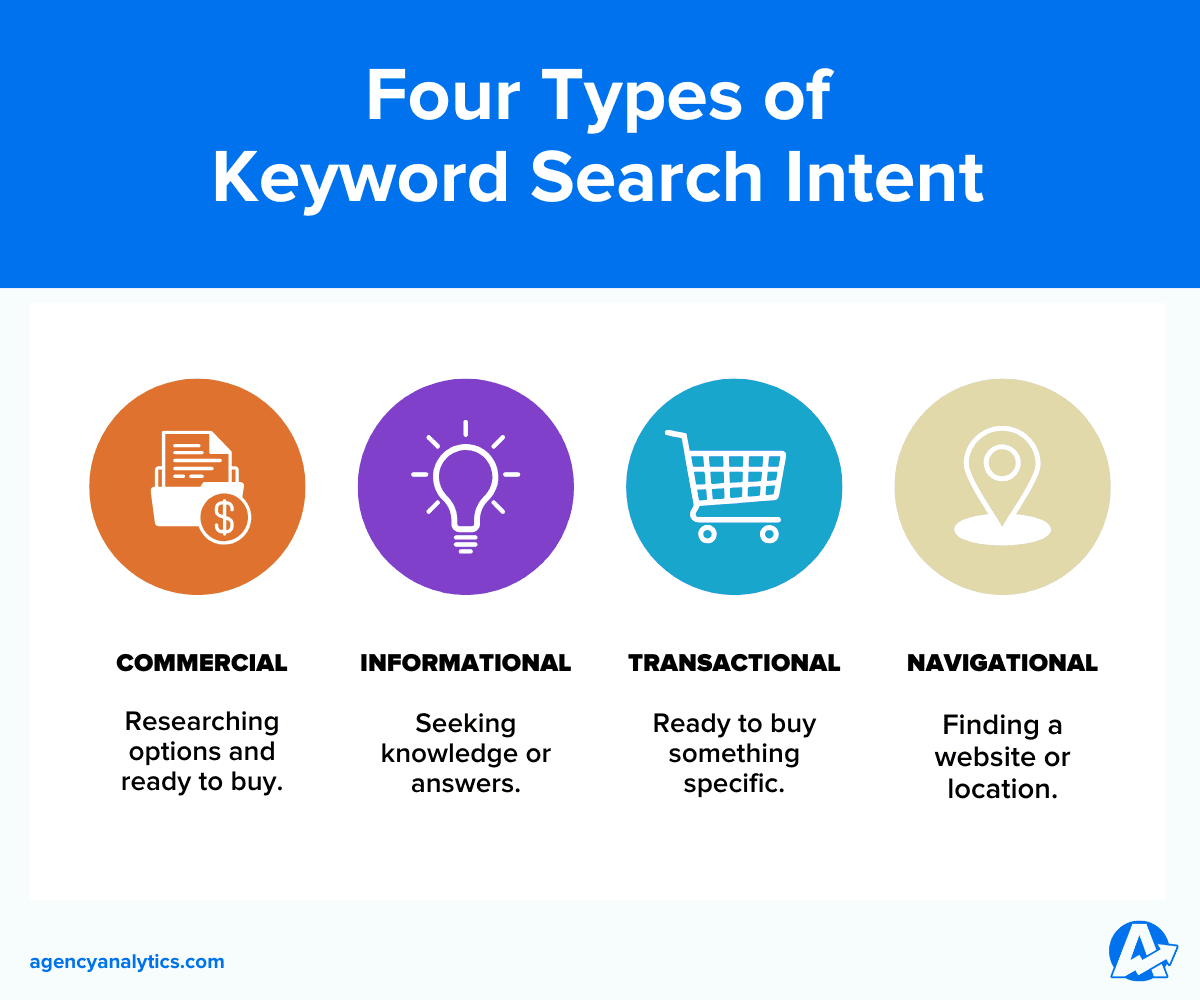
a. Informational Intent
Users are looking to learn something. These queries often begin with “how,” “what,” or “why.”
Examples:
- “How does SEO work?”
- “What is digital marketing?”
Best Content Type: Blog posts, guides, tutorials, infographics.
b. Navigational Intent
Users want to find a specific website or brand.
Examples:
- “YouTube login”
- “HubSpot blog”
Best Content Type: Branded landing pages or homepage optimization.
c. Transactional Intent
Users are ready to take action—buy, subscribe, or contact.
Examples:
- “Buy wireless earbuds”
- “Book SEO audit service”
Best Content Type: Product pages, service pages, pricing pages.
d. Commercial Investigation
Users are comparing products or researching before making a decision.
Examples:
- “Best SEO tools 2025”
- “Ahrefs vs Semrush comparison”
Best Content Type: Comparison blogs, listicles, and reviews.
4. How to Identify Search Intent

You can determine intent by analyzing:
- Keyword Modifiers: Words like “buy,” “review,” or “guide” indicate specific intent.
- SERP Analysis: Look at the top-ranking pages for a keyword—Google’s results show what kind of content users expect.
- Search Queries: Review what questions people ask in “People Also Ask” or Google’s “related searches.”
5. How to Optimize Content for Search Intent
Once you know the intent, adjust your content accordingly:
- Informational: Use clear structure, visuals, and thorough explanations.
- Navigational: Optimize your homepage and brand pages for easy access.
- Transactional: Use persuasive copy and clear CTAs.
- Commercial: Provide data-driven comparisons, pros/cons, and expert recommendations.
6. Tools to Help Identify Intent
- Google Search Console: Review keyword performance and click patterns.
- Semrush or Ahrefs: Analyze SERP intent for keywords.
- AnswerThePublic: Identify question-based informational keywords.
7. Common Mistakes to Avoid
- Targeting transactional keywords with educational content (or vice versa).
- Ignoring intent changes over time.
- Overstuffing keywords instead of focusing on relevance.
8. How Search Intent Shapes Your SEO Strategy
When your content aligns with search intent, you’re not just attracting more visitors—you’re attracting the right visitors. This approach improves engagement metrics, supports content marketing goals, and strengthens long-term SEO performance.
Conclusion
Understanding search intent is the key to connecting with your audience and ranking higher in search results. By creating content that matches what users truly want, you’ll build trust, drive conversions, and establish your brand as a valuable source of information.