
Marketing creates data every day. But more data does not automatically lead to better decisions.
The right marketing metrics reveal what attracts customers, what drives revenue, and where your budget performs best.
1. Website Traffic
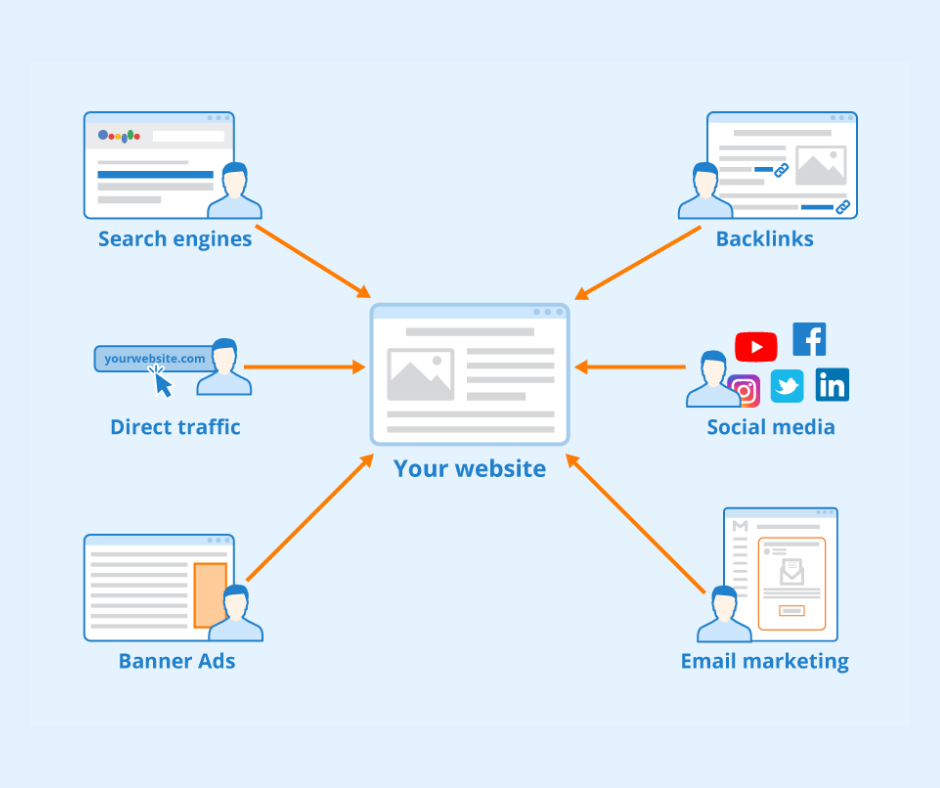
Website traffic shows how many people visit your site and where they come from.
Track organic search, paid advertising, social media, referrals, and direct traffic. These sources reveal which channels create meaningful attention.
2. Conversion Rate
Traffic matters only when visitors take action.
Your conversion rate measures how many visitors complete a desired step. That could include submitting a form, booking a consultation, or purchasing.
3. Customer Acquisition Cost
Customer acquisition cost, or CAC, shows how much you spend to gain a new customer.
Compare CAC across marketing channels. A channel generating many leads may still perform poorly if acquiring customers costs too much.
4. Customer Lifetime Value
Customer lifetime value estimates how much revenue one customer generates throughout the relationship.
Comparing lifetime value with acquisition cost provides a clearer picture of sustainable growth.
5. Return on Marketing Investment
Marketing ROI connects spending with financial results.
It helps businesses identify campaigns that deserve additional investment and campaigns that need improvement.
6. Cost Per Lead
Cost per lead measures how efficiently campaigns generate potential customers.
Track it alongside lead quality. Cheap leads have limited value when they rarely become customers.
7. Lead-to-Customer Conversion Rate
Not every lead becomes revenue.
This metric shows how effectively your marketing and sales processes move prospects toward becoming paying customers.
8. Organic Search Performance
Monitor search visibility, organic traffic, keyword rankings, and conversions from search.
SEO performance often develops gradually. Tracking these metrics helps businesses understand whether visibility is producing business results.
Focus on Decisions, Not Dashboards
Businesses do not need to track every available number.
Start with metrics connected to revenue, customer acquisition, and long-term value. Then use those insights to make smarter marketing decisions.
At Social Ubiquity, we help businesses connect digital marketing activity with measurable growth.
Frequently Asked Questions
What are the most important marketing metrics?
Start with conversion rate, customer acquisition cost, customer lifetime value, marketing ROI, and qualified leads.
How often should marketing metrics be reviewed?
Review operational metrics weekly and broader performance trends monthly. Longer-term channels like SEO may require quarterly comparisons.
Are marketing metrics and KPIs the same thing?
Not exactly. Metrics measure activity or results, while KPIs are the specific measurements tied directly to important business goals.